
What do judo, boxing, and negotiation have in common?
At first glance, quite a lot. All three are associated with fighting, dominance, and the attempt to impose one's will on the other side. Boxing is about punches. Judo is about throws. Negotiation is about arguments.
And that is precisely how many people perceive negotiations - like sparring. One side says something strong, the other responds even more strongly. One side pushes on price, the other counters with value. Argument for argument. Round after round. In short: a slugfest of arguments.
The problem is that the best competitors in combat sports do exactly the opposite. They don't try to win through strength. They try to understand the other side's movement first.
In judo, one of the fundamental principles is using the opponent's energy. If someone pushes, don't push harder. Let them build momentum and use their own movement. In boxing, the great masters also don't win because they hit the hardest. They win because they can read the fight.
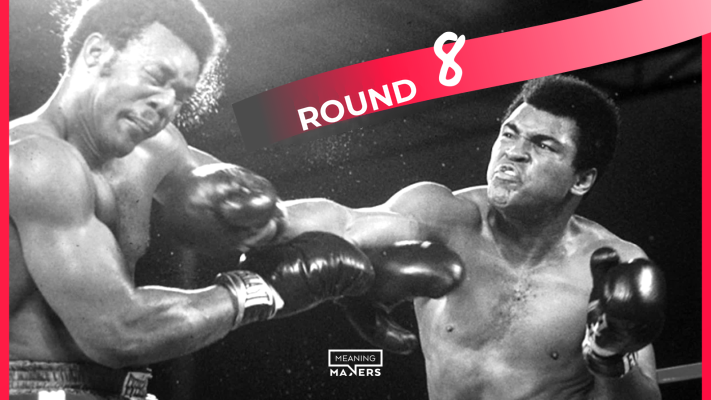
One of the most famous examples is Muhammad Ali in his fight against George Foreman in 1974. Foreman was younger, stronger, and hit like a jackhammer. Most experts were convinced that Ali stood no chance.
And yet, Ali did something that, at the time, looked like a mistake. Instead of attacking, he leaned against the ropes and let Foreman throw punches round after round. The commentators were convinced that Ali was losing.
Except Ali wasn't losing. He was observing. He was gathering information. He watched how Foreman fought, how he breathed, how he moved, and how quickly he grew tired. And when Foreman lost his energy - Ali went on the attack. And he won in the 8th round, by knockout.
In negotiations, we very often do the exact opposite. We start the conversation with punches: argument, counter-argument, argument about value, argument about price.
The problem is that in negotiations, we very rarely lose because we had too few arguments. We lose much more often because we had too little information.
Because the truth is this: in most negotiations, we operate based on assumptions.
I see this in our work with negotiation teams almost every day.
Well, because we often think that the other side has a hard budget. We think price is the most important thing. We think the client has a better alternative. We think someone is putting time pressure on them. We think something is crucial for them.
And yet we enter the conversation like entering a ring. Quick reactions. Strong arguments. Counters to every move of the other side.
Except there is one problem.
We are trying to win a fight (yes, I know, it's not always a fight – it's just a metaphor!) that we don't yet understand.
If you are interested in such mechanisms of negotiation, communication, and decision-making, you can subscribe to the Meaning-Making newsletter here on LinkedIn: LINK
Negotiations are, to a large extent, a game for information
In life, very little is truly symmetrical. People have different information, different perspectives, different constraints. It is very rare for a situation to occur where both sides see exactly the same picture of reality.
In most negotiation conversations there exists something that can be called information asymmetry. One side understands its own constraints, pressures, and needs. The other can only guess them.
In martial arts, it is often said that before you try to hit your opponent, you must first see how they move. Otherwise, you are fighting blind.
In negotiation practice, this means that both sides make decisions based on an incomplete picture of the situation. And that is exactly why in negotiations, a huge role is played not only by what you say – but above all by what information you are able to uncover.
This asymmetry is natural. The problem is that most people do not actively try to reduce it. Instead, they try to win the negotiation… by talking more.
They explain. They argue. They present their logic. They develop further threads. They try to convince the other side that their proposal makes sense.
Sounds logical. But in practice, it often works against them. Why? Because they increase the information asymmetry TO THEIR OWN DISADVANTAGE.
Every piece of information you reveal reduces your informational advantage. You expose arguments, motivations, and constraints. The other side doesn't have to analyze everything. It is enough for them to find one weaker element and focus precisely on that.
That is why experienced negotiators very often do the opposite...
Watch out, this will be shocking. What do they do?
They talk less.
And they ask more...
Why the brain confuses speaking with control
This is the moment where psychology starts working in negotiations. This is a real hit, which for me personally is one of the best examples of what we at Meaning Makers call counter-intuition. That is, a situation in which what your brain tells you is not in the interest of your success at all.
After all, when we speak, we have a sense of control over the conversation. We feel like we are leading the narrative. That it is we who decide which direction the discussion goes.
From the brain's perspective, this gives a very strong sense of agency. That's probably a good thing, right?
Not true.
You see, these negotiations are not a public speech. They are not about presenting your logic as best as possible. They are about understanding the other side's situation as best as possible. And that requires something completely different. Something very difficult...
Listening.
When the other side speaks, data starts to appear. Information about priorities, about constraints, about what is truly important, and what is just a negotiating position.
These are things you won't see in an offer or an email. They only appear in conversation. They are what give you the chance to achieve that mythical win-win you've been reading about for 40 years in literature and business journals.
And that is exactly why one of the most important rules of negotiation sounds very simple.
The one who asks the questions directs the conversation.
Chris Voss, a former FBI negotiator and author of the book Never Split the Difference, notes an interesting thing. The most effective negotiators do not dominate the conversation with the number of arguments at all. They dominate it with questions.
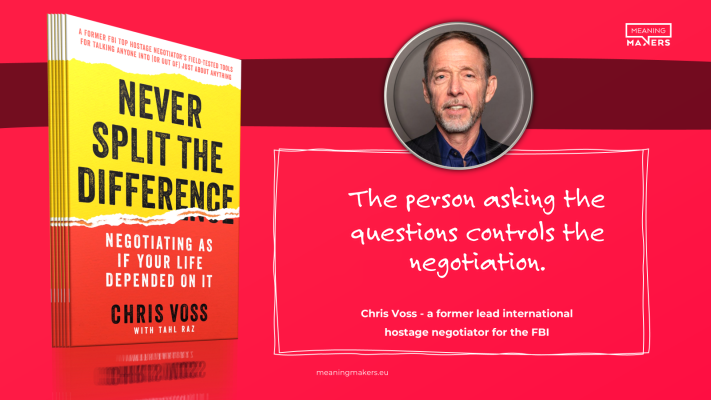
As he says himself: "The one who asks the questions controls the negotiation."
It is information that changes negotiations from an exchange of positions into a process of discovering the other party's true interests — what they want to do.
That is why the best negotiators do not start a conversation with arguments.
They start with questions.
The best negotiators ask much more
The best negotiators ask two or three times more questions than average ones.
Not because they are more talkative. Quite the opposite. They do it because questions allow them to discover information that others don't even try to obtain.
When you ask, the other side starts talking about their decision logic. About what is important to them. About what they are afraid of. About what they are trying to achieve.
Imagine a simple negotiation situation. A client says: "We need a lower price."
If you react immediately with a value proposition, you start negotiating the price. However, if you ask one simple question—for example: "Where does this priority stem from for you?"—the conversation can take a completely different turn.
Suddenly it turns out that the problem isn't the price itself at all. Maybe it's about a budget constraint in this quarter. Maybe it's about a procurement procedure that requires three quotes. Or maybe it's a fear that the project won't deliver the promised result.
And at that moment, the negotiation stops being a discussion about numbers. It starts being a conversation about the actual problem to be solved.
And this is knowledge that, in negotiations, holds immense value.
Because in negotiations, we very often only hear positions, and not the real reasons behind them (we will write more about this in subsequent articles in this series, which is why...).
If such mechanisms are interesting to you, you can subscribe to the Meaning Makers newsletter. Every week, one article appears there about the psychology of decisions, communication, and influence in business.
You can find all the articles from this series here: LINK
Someone says: "we need a lower price". But behind that sentence may lie budget pressure, a procurement procedure, fear of risk, or previous bad experiences.
If you only react to the position, you start negotiating the price. If you discover the reason, you start negotiating the solution to the problem.
And very often it turns out then that the other party's actual problem looks completely different than what we assumed at the beginning of the conversation.
The most valuable questions are often uncomfortable
There is one more reason why many key questions in negotiations are never asked.
They are uncomfortable. They often introduce tension. And tension in negotiations is difficult for people.
In such moments, something very human kicks in. The brain starts treating tension as a threat. A need arises to discharge it quickly. Someone starts talking too much. Someone changes the subject. Someone returns to safe arguments that were already mentioned before.
That is why the natural reaction is to avoid such questions.
We move on. We soften the conversation. We go back to presenting value, arguments, or more slides.
The problem is that the most valuable information is very often located right on the other side of that tension.
In martial arts training, it is precisely the moment of tension that is most valuable. When the opponent starts to retreat or change rhythm, things suddenly become visible that weren't visible before. That is where real priorities emerge. Real fears. Real limitations.
In the business version—for example, questions about what alternatives the other party is considering. Or why they are returning to the topic of a discount despite prior agreements. Or what will happen if this specific contract is not signed.
These are the questions that pause the conversation for a moment. But it is in those few seconds that the real negotiation very often begins.
Because only then does the conversation stop being an exchange of prepared positions and start becoming a discovery of what really stands behind the decision.
And that is why such questions can change the dynamic of the entire conversation.
But only when someone dares to ask them.
Why it is worth preparing questions beforehand
Many people assume that questions will arise naturally during the course of a negotiation.
After all, it is a conversation. And conversations seem like something spontaneous, right? Unfortunately...
When the conversation starts to pick up speed, the brain returns to its default mode of operation. We start explaining, arguing, and reacting to current threads. It is a very natural reaction.
Our system was designed to react to threats and defend its position.
That is why in a situation of tension, the brain very quickly switches to reaction mode. We want to answer. We want to defend ourselves. We want to prove our point. We want to quickly neutralize the other party's argument.
This is exactly the same mechanism that for thousands of years helped humans react in conflict situations.
But in negotiations, it often works against us. Because instead of asking questions that could uncover new information, we start using the arguments we already have prepared.
The conversation starts to resemble a duel of arguments, rather than a process of information discovery.
In judo or boxing, you practice reactions under pressure. You prepare yourself to react wisely. Therefore, one of the simplest elements of negotiation preparation is writing down a few key questions before the meeting.
Because at the moment when the conversation speeds up, it is very easy to forget the questions that could truly change its direction.
And a well-prepared question can do something that even the best-prepared argument cannot.
It can open a completely new direction for the conversation.
The most important question after negotiations
During negotiation workshops, I often do a simple exercise. Participants conduct a negotiation simulation. They get a scenario, have time to prepare, and analyze their strategy.
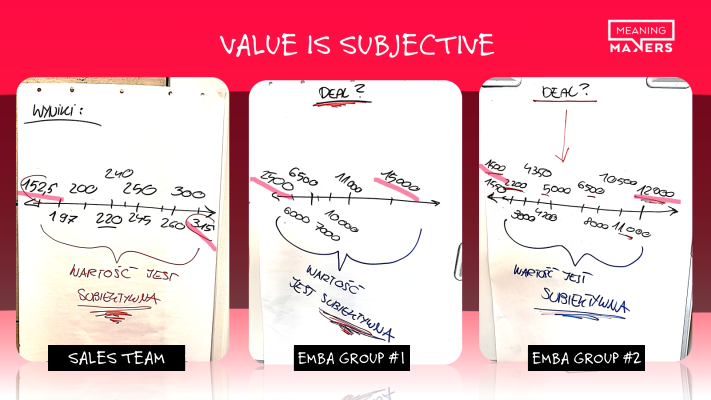
After the simulation ends, I ask them a few simple questions. I ask, for example: Why did the other side want to sell this product? Why did they want to buy it? What limitations did they have? What were their real priorities?
And very often the answer is: we don't know.
Not because this information was secret. Not because the other side didn't want to talk about it. But only because no one asked about it.
This is the first moment when participants discover something important. It is possible to conduct negotiations for over a dozen minutes and at the same time not know why the other side is making a decision.
But there is also a second case, which we observe during training. And it concerns a completely different type of conversation.
In more advanced simulations, we conduct longer and more strategic negotiations. Those that resemble real business talks: the stakes are higher, pressure for results appears, and decisions have real consequences.
In these cases, participants prepare really solidly. They analyze the scenario, write down questions, and plan their conversation strategy.
And then the negotiation begins. The topic of price appears. Competition appears. Pressure appears. And suddenly, most of those prepared questions vanish.
The conversation very quickly turns into something that resembles a duel of arguments.
Why does this happen?
Because the moment a competitive element or money appears, the brain very quickly switches to fight mode. It's a very old mechanism. Our instinctual system was designed to react to threats and defend our own position.
And in fight mode, you don't ask questions. In fight mode, you push arguments.
You defend your proposal. You react to the other side's positions. You try to win the exchange of words.
And that is precisely why one of the biggest takeaways from the second day of our Meaning Makers Negotiation program is something very simple.
The most difficult skill in negotiations is not at all finding yet another argument. It is maintaining curiosity and asking questions at the moment the conversation begins to resemble a fight.
Because it is precisely then that information appears which can truly change the course of the negotiation.
Four rules for working with information in negotiations
If you look at negotiations through the prism of information, it very quickly turns out that the effectiveness of the conversation depends not only on arguments, but on the way in which you manage the flow of knowledge between the parties.
The best negotiators do this very consciously. It can be boiled down to four simple rules.
1. Ask more questions than others
The most effective negotiators ask two or three times more questions than average ones.
Not because they are more talkative. It is because questions allow them to discover information that others don't even try to obtain.
When the other party begins to speak, data appears. Information about what is truly important to them, where the limitations are, where pressure arises, and where there is room for maneuver.
Without this information, negotiations resemble a blind game. With it, you begin to understand where the true value of the conversation actually lies.
2. Ask questions that uncover knowledge gaps
Many people prepare for negotiations by focusing on arguments. Meanwhile, it is just as important to prepare a list of things you don't know yet.
Why the other party keeps coming back to the topic of price. What alternatives they have. What is truly a priority for them. What happens if this conversation does not end in an agreement.
These are exploratory questions. Their goal is not to convince the other party, but to understand the context of their decisions.
Every answer reduces the information asymmetry between the parties, and this often leads to a completely different conversation than the one we planned at the beginning.
3. Ask questions that trigger thinking
NOTE: Questions in negotiations do not only serve to collect information. They can also influence the way the other party thinks about the problem.
A well-asked question can shift attention from price to value. From the short term to the long-term effect. From a single option to a broader set of possibilities.
For example, a request to point out two or three most important elements of the cooperation forces the other party to choose. And every choice reveals something very important.
Such questions act a bit like a pause in the conversation. Instead of reacting automatically, the other party begins to analyze the situation more broadly.
4. Prepare your questions even before the negotiations begin
During the conversation, it is very easy to fall into reaction mode. You hear an argument, so you respond with an argument. You hear a counter-proposal, so you start commenting on it.
That is why it is worth preparing a few questions in advance that you really want to ask.
Ones that will allow you to discover the logic behind the other party's decisions. Ones that can reveal their limitations or priorities. Ones that can introduce a moment of reflection into the conversation.
Thanks to this, negotiations stop being improvisation.
They begin to be the conscious management of information.
Negotiations start with understanding
In martial arts, you learn one thing very quickly. The biggest mistake is reacting solely with force.
When you focus only on your own attack, you stop seeing what the opponent is really doing. You lose the rhythm, the context, and the moment the situation begins to change.
Something very similar happens in negotiations. The brutal truth is that in most conversations, we will never have the full picture of the situation. We do not know all the constraints of the other party. We do not know all the pressures acting upon them. We do not know all the alternatives they are considering.
But we have a choice. We can rely on assumptions. Or we can try to discover more.
Top negotiators do not start the conversation with arguments. They start with curiosity. In negotiations, it is very often not the one who speaks the most who wins.
The winner is the one who understands the most.
And now, one question for you
Or rather, a few.
When was the last time you walked out of a negotiation really understanding why the other side makes such decisions? How many times in a conversation with a client, partner, or supplier do you jump to arguments faster than to questions? Do your negotiations more often resemble an exchange of positions… or a joint discovery of the situation?
And the most important question.
Was there even a single question in your last negotiations that truly changed the other party's way of thinking?
I hope this article has changed yours at least a little bit.