
It’s not about being “cultured”. It’s about culture.
And the fact that in different cultures, words and actions very rarely mean the same thing.
This is linked to one particular problem you won’t see in reports, but which in large companies is responsible for most of the tension...
As it happens, in a week I’m flying to Paris for a session with a market leader in cloud solutions. One of the first questions I asked the organisers? It was very simple:
Will all the participants be French?
Why was this important to me? Because I knew the answer to this question would change the context of the entire job. You run a session for a homogeneous group differently than for a team made up of people from different countries.
Let's leave aside the fact that me – running a workshop in English in France, for 33 French people – could have gone a number of ways.
Ultimately, it turned out to be a group from all over Europe (phew?).
Over the last few years, I’ve run training sessions in more than 25 countries. At first glance, everything looks similar. The same table, the same language, the same goals. Despite this, conversations can go in completely different directions.
It’s not about competence or motivation. The problem lies elsewhere: in the way we interpret reality through the filter of our culture, experiences, and our brain’s habits.
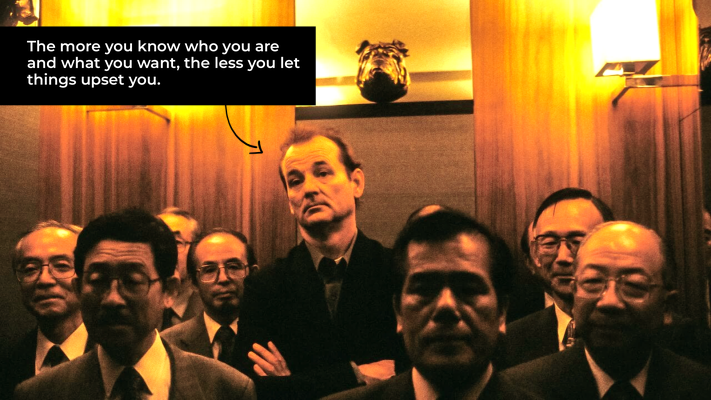
Do you know the cult film “Lost in Translation”? The two main characters end up in Tokyo. They are in the same place, looking at the same world, yet they function in a reality they don’t truly understand. Even simple situations become difficult to interpret.
But don't worry – you don't need to fire up that film to see what I'm writing about – just look around your own company, because I get the impression that nowhere is this more visible than in international organisations. You won't see it in reports. There’s no KPI for it. And yet, it influences most decisions.
Additionally: “What you’re saying makes sense. But will it work for us, with our culture?” – I often hear this in my work with companies.
This time, it won’t just be about what works, but about the conditions in which it works and what changes when you work with people who see the same situations a little differently.
Often, the method isn’t the problem. It’s the context in which we try to apply it.
The invisible problems of global teams
When I work with international teams, a few phenomena very often appear that are hard to capture in reports or KPIs. On a numerical level, everything might look correct. The project moves forward, meetings take place, decisions are made (although here I'm seeing a progressive degradation in the speed of decision-making processes – a topic for another article).
And yet, collaboration costs significantly more energy than it should.
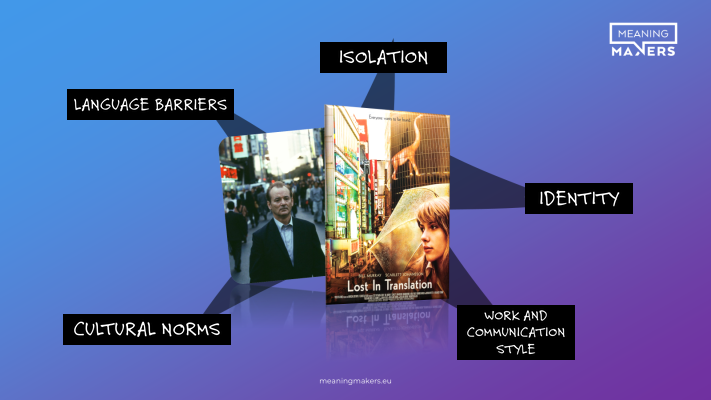
What are these phenomena? See if you recognise them too:
The first is a sense of isolation within the team. People are formally working together, participating in the same projects and meetings, but they feel they don’t fully understand how others operate.
Another problem is the misinterpretation of behaviour. The same situation can be read completely differently depending on the cultural context. Just imagine a Polish project manager who prepares a very detailed, data-driven plan and presents it to his Italian colleagues. From his perspective, this is professional preparation. For the other side, however, such a presentation might sound too formal and detached from the relationship.
Or a situation where someone sends a direct email to members of an Indian project team, not realising that in their context, they are bypassing the team leader and violating an important principle of hierarchy.
Sometimes, a single sentence spoken in the wrong style is enough. A British manager might say in feedback: “this solution could be a bit better”. To someone used to more direct communication, this sounds like a minor suggestion. In a British context, it can be a very diplomatic way of saying that something really isn’t working (yes, I know, I’ve fallen into that trap myself).
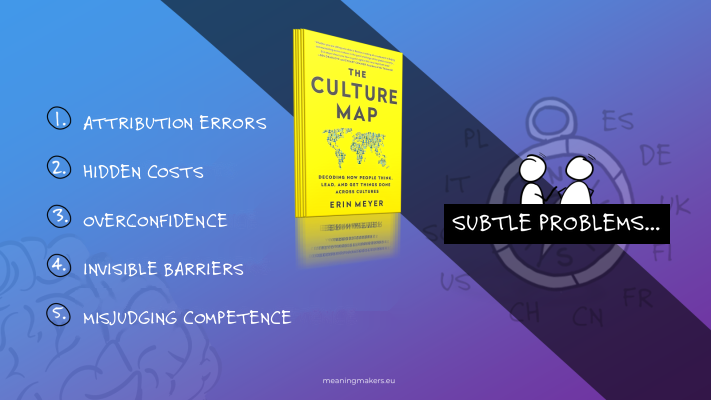
Such situations lead to another problem – attribution errors, where we assign the problem to the wrong cause because we don’t see its true source. When collaboration starts to get complicated, it's very easy to attribute the cause to strategy, competencies, or the market. Meanwhile, the source of the problem is (often) simply a mismatch of communication styles and cultural expectations.
These tensions rarely appear in reports. They usually hide within broad categories like “operational issues”, “insufficient team collaboration”, or “client dissatisfaction”.
That’s why we sometimes say that in global teams, there are hidden cultural costs that are hard to see in KPIs.
On top of this, there’s another interesting paradox. Many people working in an international environment start to believe over time that they are already very well-prepared for intercultural work.
“I’ve worked with people from different countries, so I know how it works.”
However, this level of self-confidence can be treacherous, because people make more mistakes, even though they are sure they understand everything.
It's not a language problem
The first instinct in such situations is a very simple explanation. After all...
It’s probably a language issue!
If people are working in an international team, it’s easy to assume that tensions arise because someone misunderstood something, chose the wrong word, or doesn’t know all the linguistic nuances. In practice, however, the biggest misunderstandings very often occur between people who speak the exact same language.
The words are understandable. The sentences are correct. And yet, the meanings start to diverge.
One person speaks directly because they see it as a sign of efficiency. Another perceives the same statement as a lack of respect. Some expect a quick decision, while others assume you first need to build consensus.
The words often remain the same, but the context for their interpretation changes.
I remember one such situation from early in my career, when I was still working in Ireland. There were two Dutch guys on the team. Linguistically, everything worked – we spoke English without any problems.
However, there was regular tension between us. So much so that I sometimes made strategic evasions (i.e. sick leave) just to avoid working with them.
Today, I see it completely differently. In fact, the Dutch are one of my favourite groups to train – I like their communication style: direct, to the point, no beating around the bush.
The problem back then had nothing to do with language. I perceived their directness as too harsh. They, in turn, might have felt I wasn’t being straightforward enough.
We spoke the same language. We interpreted it completely differently.
There’s one thing I remember very clearly from that situation. I assumed back then that since we all spoke English, communication should work automatically.
Today, I know that’s a very optimistic assumption. Knowing the language helps you hold a conversation. But it doesn't guarantee that people will interpret it in the same way.
This is where the real challenges of intercultural collaboration begin, because communication is often, mostly – interpretation.
Cultures differ, but the brain reacts similarly
Imagine a simple situation. I’m standing in a training room and suddenly throw a ball towards the participants. Anyone who has been to a Meaning Makers training session knows this is quite normal.
Crucially, however, it doesn't matter whether this room is in London, Warsaw, or Tokyo. Because the person I throw it to will ALWAYS try to catch it. Or at least instinctively shield themselves from it.
It’s a reflex. We all react the same way – regardless of our cultural background. Culture has nothing to do with it.
Social reactions work similarly. Our brain very quickly assesses situations, relationships, and the signals sent by other people.
Ambiguity increases tension. A loss of status triggers defence mechanisms. A lack of influence leads to withdrawal. These are very universal reactions.
They are what tell us whether someone’s behaviour is polite or not, whether someone is competent, or whether they can be trusted. The problem is that this automatic system treats our own way of seeing the world as the point of reference.
Our upbringing, our experiences, our culture very quickly become a kind of default norm in our minds.
That's why in international teams, people often operate a bit like radios tuned to different frequencies. It's only when we engage in more conscious thinking that we start to notice these filters can be different. This is precisely why working in an intercultural environment can be more cognitively demanding than it seems at first glance.
It’s not enough to speak the same language. You also have to consciously learn to tune into other people’s way of thinking, instead of automatically assuming they see the world the same way we do.
This is one of the reasons why tensions arise so often in international teams. And it’s not because people have bad intentions, but because our brain works faster than our reflection.
Dublin, “Nokians”, and the lost context
These differences in interpreting situations are very easy to see in practice. Sometimes, a single conversation or a few weeks of working in a new environment is enough to realise that although everyone is speaking the same language, they are on slightly different wavelengths.
Almost twenty years ago, I moved to the aforementioned Dublin. I managed to sort my life out fairly quickly. A good corporate job, a flat, stability. Yet something about the experience was hard to grasp.
I spoke English and understood the people I talked to, but I often had the impression that certain nuances in conversations were constantly eluding me. The conversations were correct, the projects moved forward, everything formally worked. Meanwhile, I would leave a meeting with the feeling that something important had happened between the lines and I couldn't quite grasp it.
Only after some time did I understand that the problem wasn't the language, but the context, which I wasn't yet able to read.
And recently, I was reminded of another situation from years ago, when I was working in an organisation where I collaborated with a manager from Belgium. He told me about his earlier experience, before he took on the role of leader.
At that time, he was working with a team from Finland. He wasn't their manager. What's more, they were his clients, so good collaboration was particularly important to him... yet he found it very difficult to work with them.
He even had a joking nickname for them. He called them “Nokians” – yes, a bit like Martians, but from Nokia.
Not because they worked at Nokia, but because in his opinion, they were like Martians. Their communication style was so different to him that for a long time, he was unable to understand what they were really thinking and how they were interpreting different situations.
From his perspective, the conversations were cold, distant, and hard to read. From their perspective, everything was probably completely normal.
The problem, of course, was that both sides were looking at the same behaviours through completely different interpretive filters.
The Culture Map and the logic of sliders
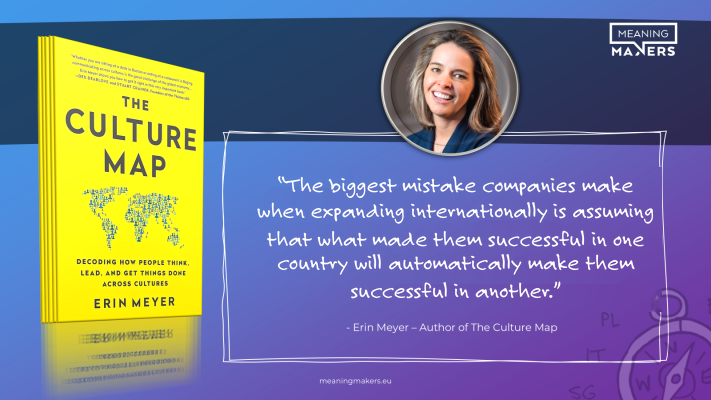
One model that shows this perfectly is Erin Meyer's Culture Map. Its greatest value is that it presents culture as a set of dimensions that can be set in different positions.
I often explain this in my training sessions using a simple metaphor.
Imagine a set of sliders on a sound mixer. Each one is responsible for a different element of collaboration. In one culture, a given slider is set higher; in another, lower. The element itself remains the same, only its intensity changes.
That's why I look at cultural differences as sliders, not as a set of separate worlds. This helps to avoid a very common mistake, which is thinking that one culture does something right and another does it wrong.
In reality, most teams operate on the same dimensions. They just set them in different places.
In Erin Meyer's model, there are eight of these dimensions. Each one describes a different aspect of collaboration. There's no point in discussing them all at once, so let's focus on three that in practice generate tension in teams.
1. Communication style – or how directly we say what we think
In some cultures, communication is very direct. People say exactly what they mean. In others, the context and the relationship are more important, so messages can be more indirect and diplomatic.
Poland is somewhere in the middle. We can speak directly, but we often soften the message, especially in formal situations.
But the Netherlands, for example, is an example of a very direct style. There, the sentence “that doesn't make sense” can be a normal part of a discussion. Japan, on the other hand, is at the other end of the scale, where communication can be very indirect, and many things are read from the context.
2. Decision-making process – or who really decides and when
In some organisations, decisions are made quickly by one person. In others, it is more important to build consensus and listen to many opinions before a final decision is made.
In Poland, we often combine both approaches. Formally, the decision belongs to the leader, but in practice, it is preceded by a series of consultations.
In contrast, in the USA, decisions are often quick and more individual. Whereas in countries like Sweden, the process of reaching a decision can be longer because building a common position is key.
3. Attitude towards hierarchy – or how much structure and role matter
Some teams operate in a very egalitarian model, where anyone can freely question their superiors' ideas. In other structures, hierarchy is an important element of the organisational order.
Poland is again often somewhere in the middle. We respect the structure, but at the same time, in many companies, open discussion is possible.
And Germany or the Nordic countries? They are more egalitarian and direct in their relationship with the leader. In contrast, in India or many Asian countries, the hierarchy is much stronger, and bypassing a superior in communication can be perceived as a serious mistake.
The most important thing is that none of these styles is inherently better or worse. The problem only arises when people assume that their own slider settings are the only natural way of doing things.
That's when misunderstandings can easily occur.
What for one person is a sign of professionalism, for another may look like a lack of flexibility. What for some is polite diplomacy, for others may sound like a lack of clarity.
That is why the culture map is not for pigeonholing people. Its role is rather to increase awareness that different teams can be tuned to different frequencies.
Did you notice something interesting about Poland in the examples above?
Exactly – we are, by and large, always in the middle...
Why Poles often fit well into global teams
Looking at these dimensions, I also have one working observation about Poland.
When I work with international teams, I often get the impression that Poland, on many of these dimensions, is located somewhere closer to the middle of the scale.
We are neither extremely direct nor extremely indirect in our communication. A hierarchy exists, but at the same time, in many organisations, you can discuss things relatively freely with superiors. Decisions can be quick, but they are not always completely authoritarian.
This is, of course, a huge simplification. Every organisation and every team is different.
But... if you look at the cultural map of Europe and the world, Poland is often in a place that isn't an extreme point on many of these axes. Perhaps this is precisely why Polish specialists adapt relatively well to working with very different cultures.
I sometimes get the feeling that this “closer to the middle” position makes it easier to adapt to different styles of collaboration. You don't have to jump from one extreme to another.
This is, of course, just a working hypothesis. But perhaps it partly explains another phenomenon: why the Shared Service Centre and global business hub sector has developed so dynamically in Poland over the last two decades.
Of course, we know – costs were hugely important, but I think the longevity of these projects must have been influenced by our native “cultural slider settings”.
Organisations that create such centres need people capable of working simultaneously with very different business cultures. Many “transitions” end in failure because “something isn't working”. And yet, Poland has made a strong and lasting mark on this map.
(Shout-out to all our clients and my friends from Shared Service Centres – you know who you are! )
Four things a good intercultural leader does
In my experience, good intercultural leaders are not experts on all the world's cultures (is that even possible?). They don't know all the rules and can't predict every reaction.
However, they consistently do certain things better than others.
In practice, this very often boils down to a few behaviours, which is a major simplification, of course – but this is my observation and my deeper reflection.
So, what does an effective leader do in an international context?
1. They assume difference before they see it
A good intercultural leader starts with a simple assumption: if there are people from different countries and backgrounds in the team, there will probably also be different ways of interpreting the same situation. This changes how meetings and projects are run.
Instead of assuming everyone understands a decision in the same way, the leader checks if the interpretations are indeed shared. After an important meeting, they might ask: “how do you understand this decision?” or “what do you think is the most important next step now?”.
Sometimes the answers can be surprising.
One person thinks the decision has already been made. Another is convinced it's just the beginning of a discussion. Someone else believes that the approval of superiors is still needed. Assuming difference doesn't mean a lack of trust. It means being aware that people may see the situation differently.
It’s better to discover this at the beginning than halfway through a project.
2. They ask more questions than they offer interpretations
One of the biggest mistakes in intercultural work is quickly interpreting another person's behaviour. Someone doesn't speak up in a meeting, and the thought immediately appears: they're not engaged. Someone speaks very directly, and the impression arises that they're difficult to work with.
In such moments, a good leader does something simple but very effective. They ask a question.
Instead of saying, “why didn't you say anything in the meeting?”, they might ask, “what is the discussion style like in your team in these situations?”. Instead of assuming a lack of initiative, they might ask, “in your team, are decisions usually made during meetings or rather after them?”.
Often, one well-asked question can clarify more than a lengthy analysis of behaviour.
Such questions not only help to understand the situation. They also show the team that different work styles are treated with curiosity, not judgement.
3. They separate behaviour from intention
This is one of the most difficult skills for a leader to master. Our brain is very quick to attribute intentions to people. You probably know it well: “it's their fault”!
If someone says something harshly, it's easy to think they want to criticise us. If someone avoids confrontation, we might conclude they don't have the courage to say what they really think.
Meanwhile, in many cases, the difference is not about intention, but about style.
Imagine a situation where a team member from a very direct communication culture says in a meeting: “this solution doesn't make sense”. In their context, this might be a normal way of conducting a factual discussion. In another team, such a statement might be perceived as an attack.
A good leader is able to stop this automatic judgement in such situations.
Instead of reacting emotionally, they try to understand whether the behaviour is really driven by a negative intention or simply a different communication style. This skill very often reduces tension in the team before a conflict has a chance to develop.
4. They learn to decode the team's culture
Every team creates its own micro-culture over time. Even if people come from different countries, after a few months of working together, they start to develop their own rules for communication, decision-making, and problem-solving.
A good leader doesn't assume they know these rules in advance. They pay attention to who speaks the most in meetings and who tends to speak only when invited. They watch whether decisions are made quickly or mature in conversations between meetings. They check how the team reacts to direct feedback.
Over time, they begin to understand how the team's “operating system” works.
This allows them to consciously manage conversations, decision-making, and ways of working. They don't impose one style on everyone but help the team find a way of collaborating that works for everyone.
The leader as a context translator
Let's sum all this up. Cultural differences, the brain's automatic reactions, collaboration sliders, and the daily work in international teams – listing all this, I get the growing impression that one of the most important roles of a leader is something that is rarely spoken about directly.
In international teams, the leader is a translator of context.
It's not about translating language. In global organisations, most people speak English. The problem arises elsewhere – and that's why the leader translates the way of thinking.
They help people understand why someone communicates more directly, why someone needs more time to make a decision, or why someone interprets feedback differently than the rest of the team.
Context is hugely important in decision-making, and it works exactly the same way in communication.
Despite this, we still very often look at culture in a simplistic way. As if it were a single variable. As if it were only about language. There are many dimensions.
That's why, so often, just like in the film “Lost in Translation”, people are in the same situation, hear the same words, and yet understand something completely different.
Soon I'll be in Paris working with a team made up of people from different European countries, but I know one thing... Regardless of which culture they come from, the mechanisms that lie behind their decisions and reactions are very similar.
The human brain has evolved in a very similar way in every part of the world.
That's probably why working with cultural differences is both so demanding and so interesting. Because we learn to see not only what makes us different, but also what we have in common.
And you?
What are your experiences with intercultural collaboration, and what have they taught you?