
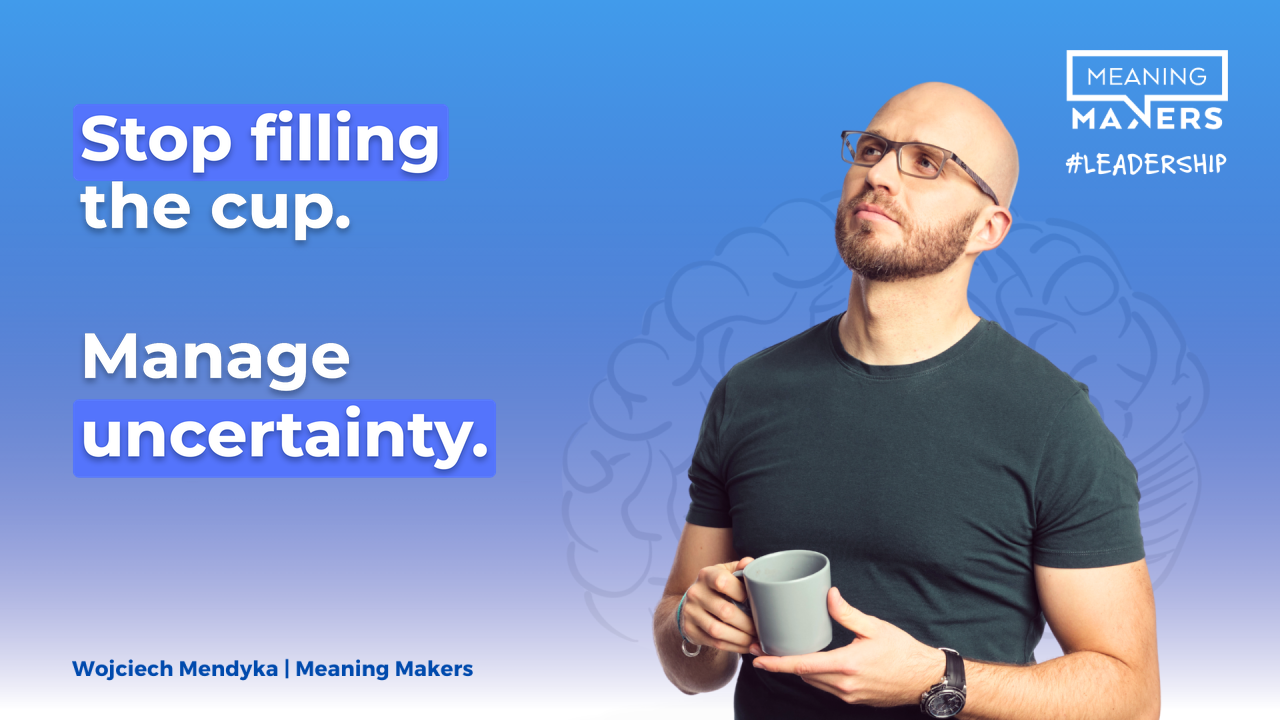
The biggest problem with uncertainty isn't the stress, but the fact that it quietly degrades the quality of our thinking and decisions.
In a manager's work, moments of full stability are rare these days (if you know, you know...). Something is always changing. Processes, priorities, goals, client expectations, or decisions from 'the top' that we have no control over. Sometimes these are big changes, and other times they're minor adjustments that start to accumulate over time.
And very often, this same manager has to pass this unclear information on to a team that expects consistency, meaning, and answers. It is at this very moment that uncertainty truly begins to multiply.
You know from experience that any small uncertainty is manageable on its own. The problem arises when they start to overlap. When it's not entirely clear what is temporary and what will last. When decisions have to be made without a full picture of the situation. And then you have to pass it on.
In such conditions, uncertainty doesn't appear suddenly. It builds up. And before we notice it, it starts to occupy more and more of our attention, and it begins to steer our actions.
A good metaphor here is an ordinary cup of coffee.
Imagine you're holding a cup in your hand. It's almost full. Nothing special is happening. You're not in a hurry. And yet, you notice you're moving differently. You've slowed down. You're controlling your steps more carefully. Part of your attention is constantly focused on the cup.
Not because it's interesting, but because it might spill.
This is how uncertainty works. When something seems unstable, your attention automatically sticks to it. Not because you want it to, but because your brain is trying to prevent potential losses.
A full cup changes the way you move. Uncertainty at work changes the way you think, decide, and react.
The brain treats uncertainty as a threat
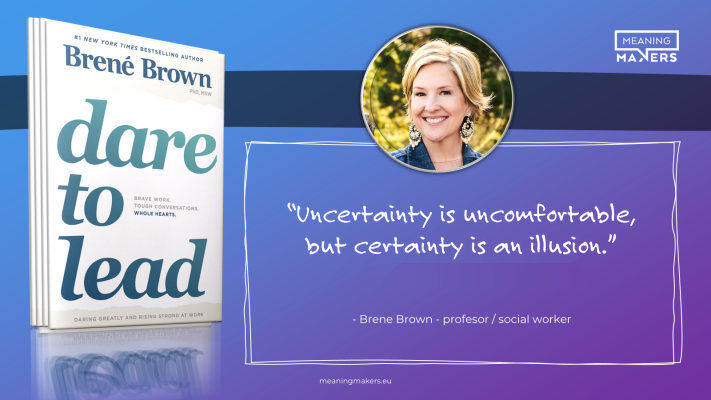
Uncertainty isn't neutral—it's uncomfortable—the brain treats it as a risk signal, so it writes its own worst-case scenarios.
Imagine a situation where you can see the management board in the office, closed off in a conference room behind a glass wall. A long meeting is underway. You can see tension, serious conversations, gestures. Everyone knows that 'some changes are coming,' but no one knows the details.
What happens later over coffee in the kitchen or the cafeteria? Does anyone say, 'I wonder what good things are in store for us.' Of course not. No one assumes it will be something positive. Uncertainty is very quickly filled with negative scenarios. Guesses about cuts, restructuring, and problems emerge.
Gossip is destructive not because people are bad or like to complain. It works this way because the brain doesn't tolerate an information vacuum. If leaders don't fill it, the brain will do it itself—usually by leaning towards a threat.
This mechanism doesn't just apply to gossip. The brain almost never interprets uncertainty as something positive. At Meaning Makers, we often call this phenomenon "negative forecasting."
When information is lacking, caution is automatically triggered. What is unclear is internally classified as potentially threatening, risky, or at the very least, unfavorable.
From an evolutionary perspective, this makes sense. For most of human history, not knowing what would happen next could mean real danger. The ability to predict, even imperfectly, increased the chances of survival. Certainty, even if false, lowered tension and allowed for action.
That's why the brain prefers a simple explanation to none at all. That's why decisive answers are calming, even if they're wrong. And that's why in complex situations, people very quickly build narratives that have one job—to close off uncertainty.
This same mechanism works in a much more subtle way every day. When something seems unstable, your attention automatically sticks to it. Not because we want it to, but because the brain is trying to prevent potential losses.
A full cup of coffee works similarly. When the liquid is close to the brim, we don't focus on the conversation or the path ahead. Part of our attention is constantly monitoring the risk of a spill. Uncertainty at work does exactly the same thing to our thinking, decisions, and reactions.
This is important in the context of leadership, because many behaviors considered irrational stop being so when we look at them as the brain's natural defense reactions.
Why uncertainty is more tiring than hard work
What many people today perceive as burnout from work is, in reality, very often exhaustion from uncertainty. They are exhausted because the 'future' is unclear.
Hard work has structure. You can break it down into tasks, plan your effort, and see progress. Even when it's demanding, it provides a sense of control. Uncertainty doesn't do that. It's in the background. It interrupts your thinking. It generates questions without answers. It makes decisions seem temporary and effort seem fragile.
From the outside, it looks like a lack of focus or engagement. From the inside, it's cognitive overload. The mental cup is already almost full.
Leaders experience this just as strongly, and often earlier than their teams. Because they feel responsible, the uncertainty quickly becomes visible in their behaviors.
How I used to add to the full cup
For a long time, one of my biggest problems was putting off difficult conversations.
Early in my career, I used to leave things 'for later.' A phone call I could have made on Friday. A topic that could have been settled with one conversation. A decision I consciously postponed because it was uncomfortable or risky.
The effect was always the same. The issue would stay in my head all weekend. I'd think about it on Saturday. It would come back on Sunday. Not because it was so complicated, but because my brain kept an open loop the entire time.
It was uncertainty that I was generating for myself. One open issue is still bearable. Two are, as well. But when they start to pile up, the cup overflows very quickly.
Over time, I learned one simple thing. If at all possible, it's better to make the call right away. To have the conversation. Even if it doesn't lead to a perfect solution. Simply closing the uncertainty frees up a huge amount of attention.
Uncertainty rarely disappears on its own. Most often, it's us who, through inaction or silence, allow it to grow.
Why uncertainty is stronger today than ever before
Uncertainty is not a new experience. Change, risk, and a lack of full control have always been a part of people's lives. The difference lies in how often and how intensely we experience them today.
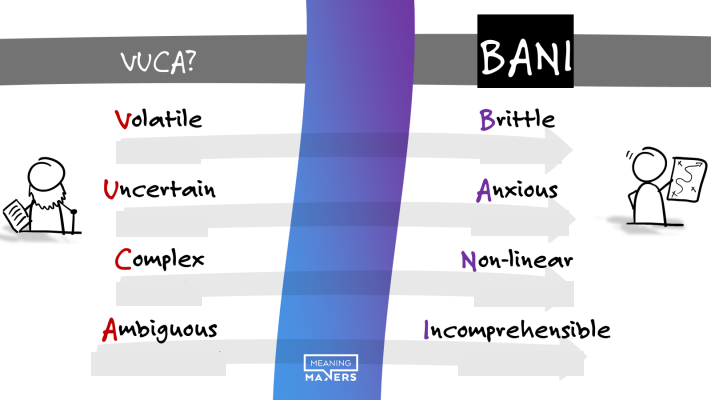
Modern work and professional life expose us to a constant flow of information, decisions with long-term consequences, and the expectation of quick reactions. This means that uncertainty doesn't appear in isolated instances but is present almost all the time.
Several factors contribute to its intensification:
1. Information overload
When was the last time you looked at your phone? Exactly, you're looking at it right now. We are exposed to a huge amount of information today. News, alerts, data, comments, opinions, and forecasts are available almost non-stop. The brain wasn't designed to function in such an environment.
It doesn't analyze information in terms of statistics or probability. It reacts to what is intense, emotional, and frequently repeated. Rare events start to look like the rule, and exceptions like the norm.
As a result, uncertainty doesn't just appear at specific moments. It is constantly sustained. Even if nothing bad is actually happening, the mind remains in a state of alert. The cup is constantly being topped up, with no moment for it to be emptied.
2. Acceleration of change and lack of closure
I get the feeling that all my clients are in a state of perpetual transformation... Just a decade or so ago, changes had a clear structure. There was a beginning, an implementation phase, and a moment when you could say the topic was closed. This was followed by a period of relative stability.
Today, changes rarely reach closure. One initiative overlaps with the next. Projects evolve during implementation. Directions are corrected before they have a chance to settle. 'Normalcy' becomes a brief episode between adjustments.
For the brain, this makes a huge difference. Uncertainty is much easier to bear when you know it's temporary. When change becomes a permanent state, the tension never has a chance to subside.
3. Shift of responsibility to the individual
Pressure, pressure, pressure. Modern organizations increasingly rely on autonomy and independent decisions. Leaders are expected to make quick choices, often with incomplete data and under intense time pressure.
On the one hand, this increases the sense of influence. On the other, it significantly raises the cost of error. If something goes wrong, the responsibility is very clearly assigned.
For the brain, this means one thing: the stakes of a decision are rising, while the availability of certain information is decreasing. This naturally strengthens the need for control and clarity, which are increasingly difficult to provide.
4. Lack of a shared narrative and points of reference
We all live in our own bubbles today... Everyone sees a different reality. In the past, there were more shared frameworks for interpretation. Clear rules of the game, predictable development paths, and fairly consistent ideas about what was 'normal' in work and career.
Today, these points of reference are scattered. Different teams operate within different narratives. What is a sign of crisis for some is everyday life for others. It's harder to judge whether a given situation is temporary or permanent.
The lack of a shared map increases uncertainty because people don't know how to interpret what's happening. In such conditions, the role of the leader as someone who brings order to meaning, not just transmits information, grows.
5. Public visibility of mistakes and judgments
We are all in a web of connections and relationships—much more visible than before. Therefore, decisions made by leaders today are much more visible than they used to be. The results of work are more quickly judged, compared, and commented on. Feedback arrives instantly, and not always in a constructive form.
This means that uncertainty is no longer just about whether a decision was right, but also about how it will be perceived. How it will be judged. How it will affect the image of the leader or the team.
In such conditions, caution, risk aversion, and the need to quickly close topics naturally increase. Not to perform better, but to limit exposure.
What uncertainty really takes away
At this point, it's worth seeing what uncertainty actually does to our thinking.
When the cup is full, it doesn't drain our energy directly. It takes our attention. A portion of our cognitive resources is constantly occupied with monitoring risk. Thinking becomes less free, decisions more conservative, and reactions more cautious.
Uncertainty works in exactly the same way. It doesn't decrease motivation first. It first limits the ability to think. When the future is unclear, the brain remains in a state of alert, even if nothing is happening at that moment.
The brain prefers predictability because it's energetically cheaper for it—it requires fewer resources than constantly monitoring the unknown and potential risks.
It works similarly to a phone notification during work that requires focus. All it takes is for the phone to signal a new message. Even if you don't open it, part of your attention is already occupied.
The brain starts to keep an 'open loop': what is it, do I need to react, is it important. From that moment on, you no longer have full access to your cognitive resources. Some of them are constantly engaged in monitoring this unknown.
You don't have to check anything or make a decision. The mere presence of uncertainty is enough to reduce your ability to concentrate, analyze, and think creatively.
That's why asking people to concentrate, be creative, or be engaged without addressing uncertainty rarely works. The problem isn't a lack of desire to work. The problem is limited cognitive capacity.
A leader's reflex under the pressure of uncertainty
When the ability to think declines, automatic reactions are triggered. This also applies to leaders.
In the face of uncertainty, a strong need for closure arises. Decisions are made more quickly than the available information allows. Communications become more detailed than the facts would suggest. The need to control and organize everything at once increases.
This reflex is not a character flaw or a lack of competence. It's a defensive reaction of the brain trying to reduce tension and regain a sense of predictability.
The problem is that clarity built too early is rarely lasting. It is often a temporary narrative that fills the gap until reality verifies it. When that happens, disappointment follows, trust erodes, and the next wave of uncertainty is even stronger.
From the team's perspective, micromanagement, over-communication, or frequent changes in direction don't look like protection. They look like chaos.
Uncertainty is inevitable. Reinforcing it is not.
Uncertainty itself is not the biggest problem. The problem is the way we react to it when it starts to limit our ability to think and pushes us toward automatic actions.
Leadership is not about eliminating uncertainty. That's impossible. The future will remain unclear regardless of the number of analyses and plans.
The leader's role is to prevent uncertainty from spilling everywhere and taking over the attention that is needed for daily work. It's about consciously lowering the level of tension where possible.
The goal isn't to carry a full cup perfectly. The goal is not to top it up to the brim.
Four moves a leader can make to lower the level in the cup
Each of these moves doesn't eliminate uncertainty, but it limits its impact on the attention, emotions, and quality of decisions within the team.
When we talk about uncertainty, it's easy to stick to generalities. In practice, leaders ask something different: what exactly should I do when I don't know what's next, and the team is looking to me for answers?
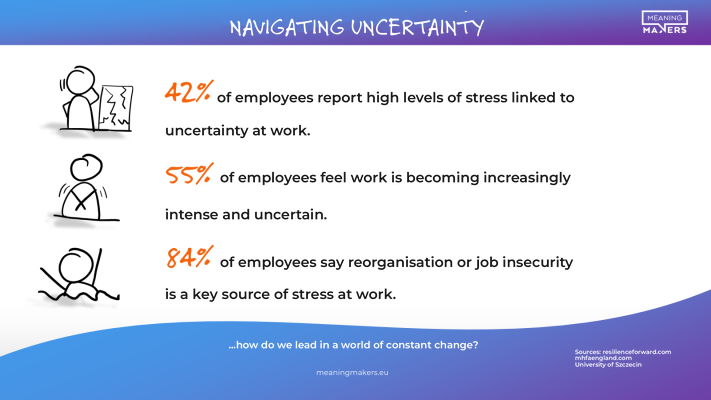
The following four actions do not eliminate uncertainty. They do not provide full control over the future. But they do something much more important—they reduce cognitive chaos, lower tension, and allow people to function despite the lack of clear answers.
1. Don't pretend everything is clear
The biggest mistake leaders make in uncertainty is silence or communication that feigns a certainty that doesn't actually exist. When people feel that 'something is going on,' but no one addresses it, they automatically start creating their own interpretations.
Example for a leader: The organization is awaiting a decision from headquarters regarding restructuring. The team leader doesn't know the details and is afraid of 'spreading panic,' so he avoids the topic. As a result, rumors grow, and people are more stressed than before.
A better approach is clear communication: what we know, what we don't know, and when we'll be back with an update. Simply naming the uncertainty reduces the level of speculation, even if it doesn't provide answers.
2. Stop the spirals of speculation
When tension rises, the team very quickly starts treating assumptions as facts. A leader who doesn't manage this distinction unwittingly reinforces the team's emotional reactions.
Example for a leader: Quarterly results are below plan. Comments about possible layoffs, budget cuts, and the 'end of the project' start circulating in the team. The leader, instead of reacting emotionally, stops the conversation and clarifies the situation: what is based on data, and what is just interpretation.
This doesn't eliminate uncertainty, but it restores rational thinking and limits the escalation of fear.
3. Remind people what isn't changing
If a leader only talks about what is changing, the team's brain no longer sees anything stable. When a leader's communication focuses exclusively on changes, the team's brain automatically interprets this as a threat. People need points of reference that are not subject to constant fluctuation.
Example for a leader: The company is undergoing a transformation of processes and structures. The leader regularly communicates the changes but also emphasizes the elements that are not changing: the way decisions are made, the team's values, expectations regarding collaboration.
This gives people a sense of continuity, even if the future remains unclear.
4. First, get a handle on yourself
Uncertainty always hits the leader first, before the team sees it. If the leader is in a state of tension and needs quick closure, the team immediately picks up on it. Emotions spread faster than information.
Example for a leader: Under pressure from deadlines and management expectations, the leader starts making quick decisions, changing the direction of actions, and excessively controlling the details of the team's work. The intention is to calm the situation, but the effect is an increase in chaos.
A self-aware leader first stops their own reaction, gives themselves time to organize the information, and only then communicates with the team. A leader's composure doesn't solve problems, but it creates a space where the team can think and act.
These four moves do not require full knowledge or perfect decisions. They require only one thing—the awareness that the greatest threat in uncertainty is a lack of orientation, not a lack of answers.
Lowering the level in the cup
Leadership in uncertain times is not about having all the answers.
It's about creating conditions in which people are able to function, even though the answers are not yet there. It's about providing a sufficient amount of clarity, stability, and psychological safety so that daily work is not constantly disrupted by the tension associated with the future.
When the level of uncertainty is too high, the team's attention doesn't go toward solving problems, but toward monitoring risk. People are more cautious, less creative, and quicker to withdraw. Not because they don't want to act, but because too much of their energy is spent 'watching the cup.'
The leader's role is not to ensure the cup is always full and perfectly controlled. The leader's role is to consciously lower its level where possible. Sometimes through communication, sometimes by organizing thoughts, sometimes through their own calm and restraint.
People don't need complete certainty to move forward. They need orientation. They need to know where they are, what is stable, and what they can rely on at any given moment.
In a world where uncertainty will always be present, a leader's greatest advantage isn't predicting the future, but the ability not to top up an already full cup...
So, coffee?
Now you
Stop for a moment and think about your team or organization.
Where is the greatest uncertainty today? What is really occupying people's attention the most, even if it's not being said out loud? Which elements of the situation are facts, and which are just interpretations or fears?
Also, ask yourself one uncomfortable question as a leader: are your own behaviors lowering the level in the cup, or are you unconsciously adding even more to it?