
The greatest threat to value is that we get used to it.
Just a week ago, I really wanted the holidays to be over.
After almost two months without running any training sessions, I was already missing the training room, the people, the faster pace, and that specific tiredness after a good day's work. For most of the summer, I had exactly what I needed: home, kids, the garden, working out, a few trips, a much lighter calendar, and basically zero running around airports and stations with a suitcase.
It was great. But after a few weeks, that great holiday rhythm started to seem completely ordinary. Breakfast without looking at the clock, kids at home all day, going out into the garden, no meetings from morning till night. At first, you think: yes, this is just what I needed. By the end of August, it's just what a day looks like. Another one.
Today, I'm sitting at a station, on my way to run the first training session after this break. It's a bit funny that just leaving the house was enough to make a simple morning with the kids and a coffee on the terrace seem more valuable again.
We get used to good things very quickly. You buy a car you've been thinking about for a long time, and for the first few weeks, you look back at it after you've parked. A few months later, you just get in and drive. You move into a house that was once a major life plan, and a few years later, the thing that interests you most is that the grass needs mowing again.
The same thing happens with work, money, comfort, relationships, health, or the people around us. Things don't have to lose their value for us to stop noticing it. It’s enough that they are simply there for a long enough time.
Two months without Meaning Making
After almost a year of writing regularly, I also took a break from the newsletter. And, to be honest, I was very happy about that.
I didn't have to wonder mid-week what I wanted to write about this time, collect examples, edit the text for the sixth time (if only!), and then conclude after two hours that the first draft actually had more life in it. For a few weeks, I simply didn't open the document for the next article.
During the holidays, however, I received a few messages from people asking when the next issue would be out. It made me feel a little sheepish. Someone on the other end was actually waiting, and here I was, very consistently sticking to my plan of sitting in the garden and not producing any particular intellectual value. After all, that was the plan.

But those messages got me thinking. For almost a year, the newsletter came out regularly, so for me, writing had become part of my week. For some readers, its presence had apparently also become part of their regular rhythm. It was only the break that made its absence noticeable.
It worked similarly for me. At the beginning of the summer, the last thing I wanted to do was write another article. After a few weeks, I started jotting down ideas again, revisiting topics, and catching myself actually wanting to write something.
Today's trip and those holiday messages reminded me of something I see very often in sales.
A client can get used to value in exactly the same way.
The paradox of a good supplier
A company has been working with the same partner for three years.
At the beginning, the difference is very clear. People respond quickly, understand the business, stick to deadlines, remember agreements, and take ownership of problems before they turn into a bigger mess. After a few months, they know the organisation so well that you don't have to explain everything from scratch in every conversation. They know who really makes the decisions, where complications usually arise, and which things are worth double-checking.
The first year of such a partnership can be very impressive. After three years, most of these things don't particularly impress anyone.
A same-day response becomes the standard. Familiarity with the organisation seems obvious because, after all, “they've been working with us for years”. Problems solved early enough are not remembered because they never had the chance to become big problems. People on the client's side stop doing part of the work because someone has long been doing it for them.
But be careful. This is precisely where a good supplier can start to have a problem.
If you deliver really well for a long time, the client gradually stops comparing the current situation with how it used to be. They start to treat the results of the partnership as the natural state of the world.
Something that was an important argument for choosing the supplier three years earlier, over time, ceases to be an argument for staying with them.
I don't see this as ingratitude. It's more a case of simply getting used to a new standard.
At a moment like this, a competitor's offer that's 5% cheaper can look quite reasonable. The scope is similar, the references are good, the team seems competent, and everything adds up in the presentation. So, someone on the client's side starts to ask what exactly they're paying the extra 5% for.
It's a reasonable question, especially if, for the past few years, no one has helped them remember what exactly makes up that difference.
The result? After switching suppliers, responses start taking two days instead of two hours. Deadlines need to be chased more often, context has to be re-explained, and things that were never checked before now need checking. Part of the work comes back to the people on the client's side because it turns out someone still has to do it.
After a few weeks, the previous partnership might look a lot better than it did on the day the decision was made to switch.
The value was there all along. The client had just stopped noticing it.
What happens before we lose something
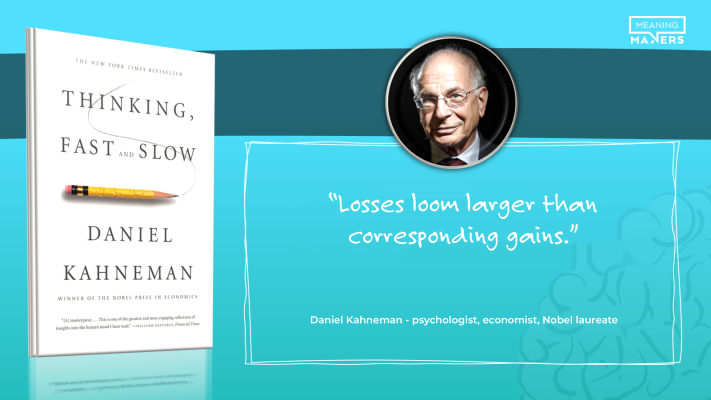
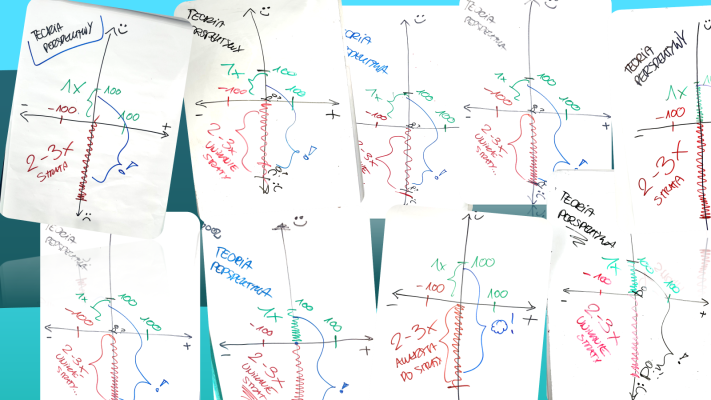
I've been talking about loss in sales for years. In 1979, Daniel Kahneman and Amos Tversky described something in Prospect Theory that significantly changed the way we think about decisions. People don't just evaluate outcomes based on what they have in the end. The reference point is highly significant, as is whether we perceive a given change as a gain or a loss.
A few years later, this mechanism was very vividly demonstrated in experiments with objects that people were given ownership of. In one of the most famous studies, Kahneman, Jack Knetsch, and Richard Thaler gave mugs to some of the participants. One group had to state for how much they would be willing to sell their mug, while the other had to state for how much they would want to buy the same mug. The mug was the same. Only the point of view was different: for one group, it was something they already owned; for the other, something they did not yet have.
The difference was significant. In one of the experiments, the median selling price was $5.75, while the median buying price was $2.25. The mere fact of possession meant that giving the object up was valued much more highly than the possibility of acquiring it. A similar effect was repeated in subsequent variations of the study.
This is important for sales because the client doesn't just compare two objective states: “I have a solution” and “I don't have a solution”. When the current situation becomes their reference point, any change also starts to be evaluated through the lens of what they will have to give up.
Lately, I've been more interested in the earlier stage. For something to become a loss, it first has to enter our normal world.
A new level of quality, greater convenience, faster service, or increased security are very noticeable for a while because we remember the previous state. After a few months, the reference point shifts. You no longer think that the supplier responds exceptionally quickly. You assume that the response simply arrives in two hours.
Similarly, you don't remember that one person on your team used to spend half a day overseeing a process if they haven't had to do it for two years. It's also hard to appreciate the absence of escalations, problems, and fires, because by definition, these are things that aren't there.
Loss brings back perspective with exceptional effectiveness. If a new supplier responds after two days, you very quickly recall the previous two-hour response time. If a problem that had long been absent returns, the previous level of service no longer seems so obvious.
For me, this element is more interesting than the classic “people fear loss more than they value gain”. In a client relationship, you can deliver great value for a really long time and simultaneously allow the memory of it to slowly fade.
A client can lose something at every stage of the partnership
That's why it's worth thinking about loss not just right before the client's purchasing decision. This mechanism appears throughout the entire relationship.
As it happens, I'll be working on this topic tomorrow at a Meaning Makers Sales workshop, so it's particularly fresh in my mind. I see four moments in a client relationship where the perspective of loss can genuinely change how they look at a decision.
1. Before the client buys, show the cost of their current way of working
Salespeople love to talk about the future. The solution will be faster, easier, more effective, results will improve, and people will save time.
Meanwhile, the present also has its price.
Each subsequent month can mean wasted time, unrealised sales, greater risk, or the energy of people dealing with the same problem for the hundredth time. In one organisation, it will be a reporting process that takes up dozens of hours a month. In another, it's a poor conversion rate that the team has grown used to. Elsewhere, it's yet more meetings after which nobody is quite sure who is supposed to make the decision.
If a situation like this lasts for several years, it often stops looking like a problem. People start to say: “that's just how it is here”.
A good sales conversation should therefore help the client regain that perspective and see not only the value of the future solution but also the price of staying exactly where they are.
2. When comparing offers, help them see more than just the price
On paper, several companies can look very similar. The scope, deadlines, SLA, references, and team experience often differ a lot less than salespeople would like.
If the client doesn't see a significant difference in the way of working, the quality of thinking, the risk, or the service, price becomes the easiest thing to compare. From the client's perspective, this is completely logical.
That's why just saying you're more experienced, faster, or more flexible doesn't change much. The client needs to see what these differences mean in their day-to-day world.
The key? Present it as if they already have it, if they choose you. This is how you create a sense of loss.
This helps transport the client mentally to the world after the decision. If they can concretely imagine what their team's work will look like, what will disappear from their calendar, and which problems will stop coming back to them, this future state becomes more than just a promise on a slide. It becomes a reference point. Giving it up starts to have a cost.
How will their team's work change? What risk are they taking on? What will happen when something doesn't go according to plan? Which tasks will remain on their side, and which will the supplier take over?
This type of conversation helps build a real reference point. You create a picture of the future that is harder for the client to give up later. Two offers that previously looked almost identical start to mean two different things to the client.
3. During the partnership, remind the client of the journey
This is the stage that probably interests me the most.
Before signing a contract, companies can spend months preparing their value proposition. They create presentations, case studies, ROI calculations, and dozens of slides showing why this particular solution makes sense.
After the contract is signed, implementation begins, and it's easy to assume that if value is indeed being delivered, the client will surely see it.
Not necessarily.
If something works well for a long time, the memory of the starting point simply fades. So it's worth occasionally going back with the client to what the situation looked like a year or two earlier, what has been improved, what problems have disappeared, and what work their people no longer have to do.
You don't need a presentation titled “Look how great we are” for this. Sometimes, a normal conversation during a business review, in which you compare the pre-partnership state with where the client is today, is enough.
A year ago, this process took six days; now it takes two. Previously, most problems ended in escalation; now the team resolves them much earlier. Three people used to manually oversee the data; today, they hardly have to think about it.
In a well-functioning partnership, a large part of the value is hidden precisely in the things that have stopped happening: problems, delays, escalations, extra phone calls, and hours spent overseeing the process.
After a few years, it's easy to forget that the absence of these things is also a result of work.
If we never return to the starting point, several years of really good partnership can one day be reduced to a single cost item in an Excel sheet.
Yes, I know that hurts.
4. When discussing a potential departure, name what might disappear along with the partnership
A client, of course, has the right to change suppliers, and sometimes it will be a very good decision. Perhaps someone really will do the same job cheaper or better.
But it's worthwhile for the decision to take into account the entire package of things that have become commonplace over the years.
Familiarity with the organisation, relationships with specific people, speed of operation, understanding of processes, knowledge of mistakes made several years earlier, the way of reacting in difficult situations, or simple trust are all hard to put into a comparison table. They're even harder to price when they've just been working for a long time.
A conversation about potential loss doesn't have to mean scaremongering about the competition. It can come down to a very specific question about which elements of the current way of working will change along with the supplier.
The client might still leave. But at least they won't be comparing -5% on the invoice with zero on the other side. They will also see the costs that couldn't be entered into the bid table.
I'm getting back to work
Just a week ago, I was really glad the holidays were ending. After two months of home, kids, and a more relaxed life, I wanted to get back to people, the training room, and work.
Today, I have a little more appreciation for the morning I left behind at home.
It was a similar story with the newsletter. For the first part of the holidays, I was very happy not to have to write anything. After a while, I started gathering ideas again and returning to topics I'd previously put aside. The messages from people asking about the next Meaning Making also played their part.
Maybe that's why it's so easy for us to forget the value of things we've had close to us for a long time. They don't have to get worse. Sometimes we just know the world in which they are present a little too well.
My train is about to arrive.
After two months, I want to work again. And, as you can see, I want to write again.
Now, over to you
Think of one client you've been working with for a long time. Especially one where the partnership works so well that it's hardly ever talked about.
Try to reconstruct the starting point: what was the problem before the partnership began, what has changed since then, and which things now work so normally that the client has probably stopped noticing them.
And then check one thing: if you were gone tomorrow, what would the client start to miss first?